
English | Español

Updated: March 31, 2026

FREE opioid overdose kits are available at all DPH health clinics. Each kit contains naloxone nasal spray, fentanyl and xylazine test strips, easy-to-read instructions (Spanish instructions available upon request), and information on how to spot an opioid overdose. Call the Care Line at 1-855-472-3432 to ask where you can pick up an opioid overdose kit, or click the button below to find a public health clinic near you.

The South Carolina Department of Public Health (DPH) is one of 66 recipients awarded the Centers for Disease Control and Prevention’s (CDC) Overdose Data-to-Action cooperative agreement. The DPH Injury and Substance Use Prevention team works with the SC Office of Substance Use Services (OSUS) as part of the Governor's Opioid Emergency Response Team to help prevent opioid misuse and opioid deaths in South Carolina.

Learn the Signs of an Opioid Overdose
Image
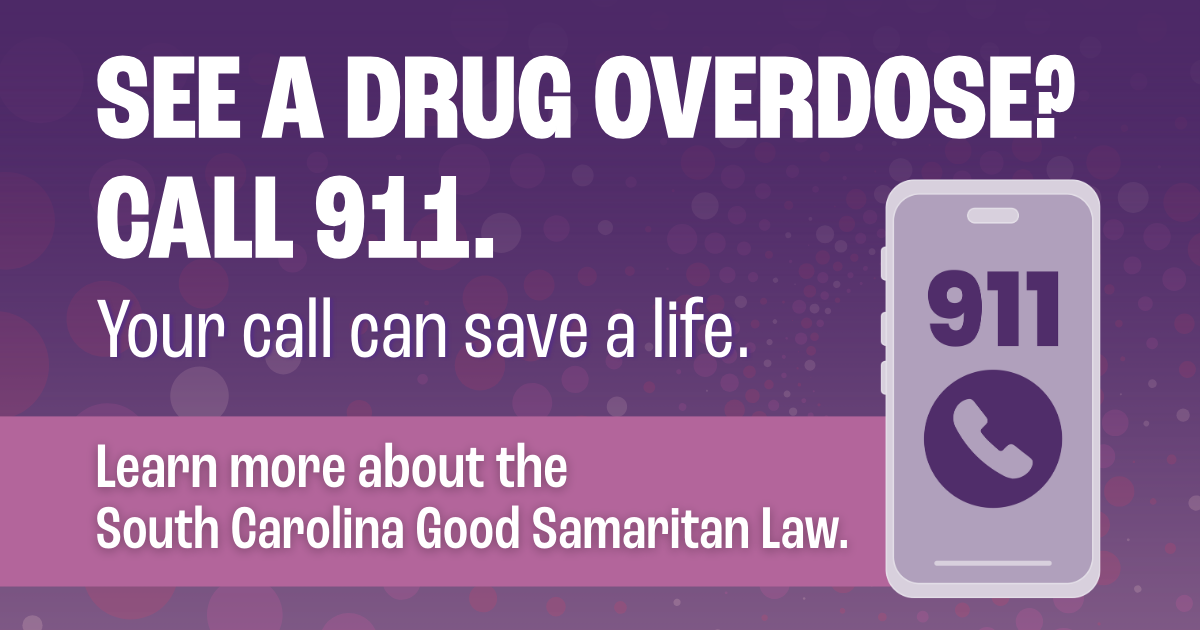
See a drug overdose? Call 911. Your call can save a life. Learn more about the South Carolina Good Samaritan law. Graphic in shades of purple with a cell phone dialing 911.

If someone is unresponsive, look for the following signs:

  • Slow or stopped breathing
  • Blue or gray lips or fingertips
  • Pinpoint pupils

If you see signs of an opioid overdose, it is important to call 911. If you feel comfortable performing CPR or giving rescue breaths, be sure to follow instructions from the 911 operator.

Every Second Counts

Rescue breaths are a lifesaving first aid technique that can be performed by anyone. The goal of rescue breathing is to provide oxygen to the brain and body until help arrives. 

How to Perform Rescue Breaths:

  1. Check breathing for 10 seconds
  2. If not breathing, pinch nose shut
  3. Tightly seal your mouth over theirs
  4. Give 1 breath every 5–6 seconds
  5. Watch for chest rise
  6. Continue until help arrives

South Carolina Good Samaritan Law

South Carolina has a Good Samaritan law intended to encourage people to seek medical help in an overdose emergency. See S.C. Code §44-53-1920.

Overdose Prevention
Image
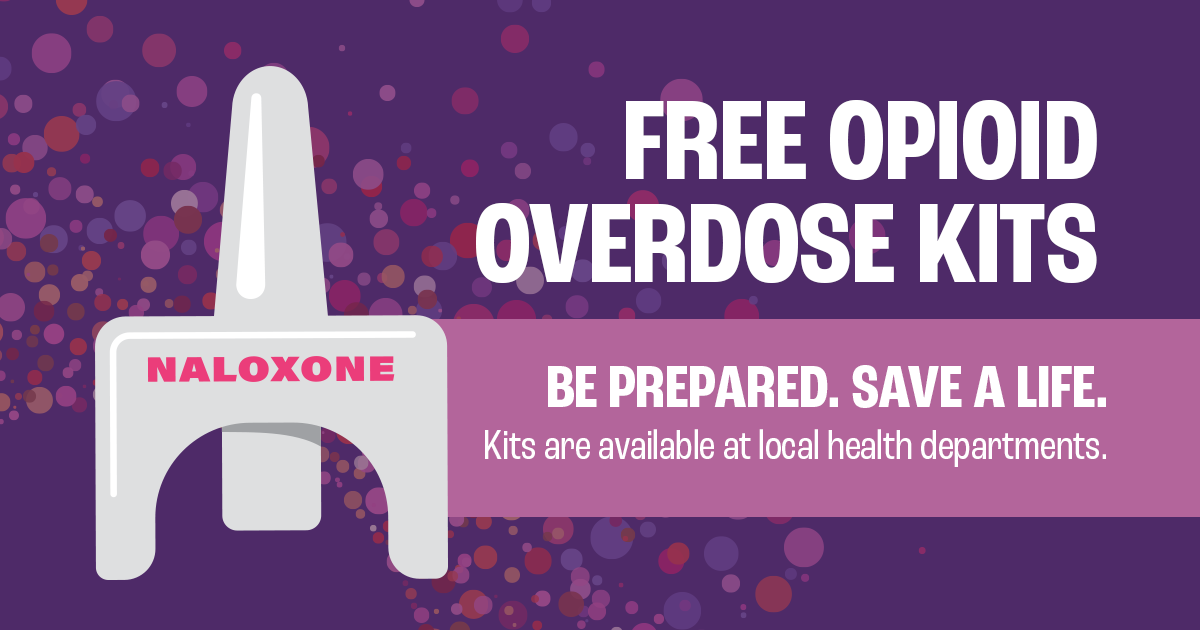
Free Opioid Overdose Kits. Kits are available at local health departments. Naloxone spray to left of text

DPH works hard to reduce opioid overdoses by supporting the distribution of the lifesaving opioid antidote, naloxone (Narcan®). Naloxone is available at each public health clinic and is provided to schools and emergency departments. There are also community distributors across the state that can provide naloxone.

Naloxone (Narcan®) is a medicine that can reverse the effects of opioids. Opioids include drugs like heroin, prescription pain killers, and fentanyl. Naloxone safe to use even if opioids are not present. For more information on naloxone, contact Julia Horan at horanjc@dph.sc.gov

Naloxone Distribution by Location

If you are worried that you or someone you know could have an opioid overdose, be ready with a free opioid overdose kit from your local DPH health clinic. We do not ask for personal information or ID. Find a clinic near you with the online clinic locator tool or call the DPH Care Line at 1-855-472-3432. For more information on naloxone, contact Julia Horan at horanjc@dph.sc.gov.

Free DPH OD safety kits include:

  • Naloxone nasal spray: An easy-to-use medicine that can reverse the effects of opioids
  • Fentanyl and xylazine test strips: Can tell you if fentanyl or xylazine are in different kinds of drugs
  • Easy-to-read instructions (Spanish instructions available upon request)
  • Info on how to spot an opioid overdose

In 2023, the South Carolina Legislature passed House Bill 4122, which Governor McMaster signed into law, authorizing DHEC — DPH's predecessor— in consultation with South Carolina Department of Education (SCDE), to create and update a list of lifesaving medications school nurses and trained staff are authorized to use in schools and provide guidelines for each medication.

Through this partnership with the SCDE, two free boxes of naloxone (Narcan®)(each containing two doses for a total of four doses per school) were made available for pickup to every K-12 school in South Carolina. School naloxone distribution was made possible with funds from the Centers for Disease Control and Prevention’s cooperative agreement Overdose Data-to-Action. This effort is ongoing, while supplies last. There is no cost to schools for participating. For more information, contact Victoria Ladd at laddvj@dph.sc.gov.

Resources for Schools

People who use opioids often go to the hospital for help. DPH works with the SC Hospital Association to give free naloxone to emergency departments. For more information, contact Julia Horan at horanjc@dph.sc.gov.

Resources for Hospitals

Contact

Julia Horan - horanjc@dph.sc.gov 

Community distributors, who have obtained a community distribution designation through the Office of Substance Use Services, can distribute naloxone to the public.

Resources for Community Distributors