
Giving to Give: Tripp Clark Becomes Living Kidney Donor
Wednesday, Mar 18, 2026
Evelyn Fernandez
Office of Communications and Public Affairs
National Kidney Month, observed annually in March, raises awareness about the crucial role kidneys play in overall health and the high, often undetected prevalence of kidney disease. In honor of this observance, we are sharing a story from Tripp Clark, DPH Procurement Director, who in 2025 became one of the 6,521 people who donated a kidney through living donor programs across the United States.
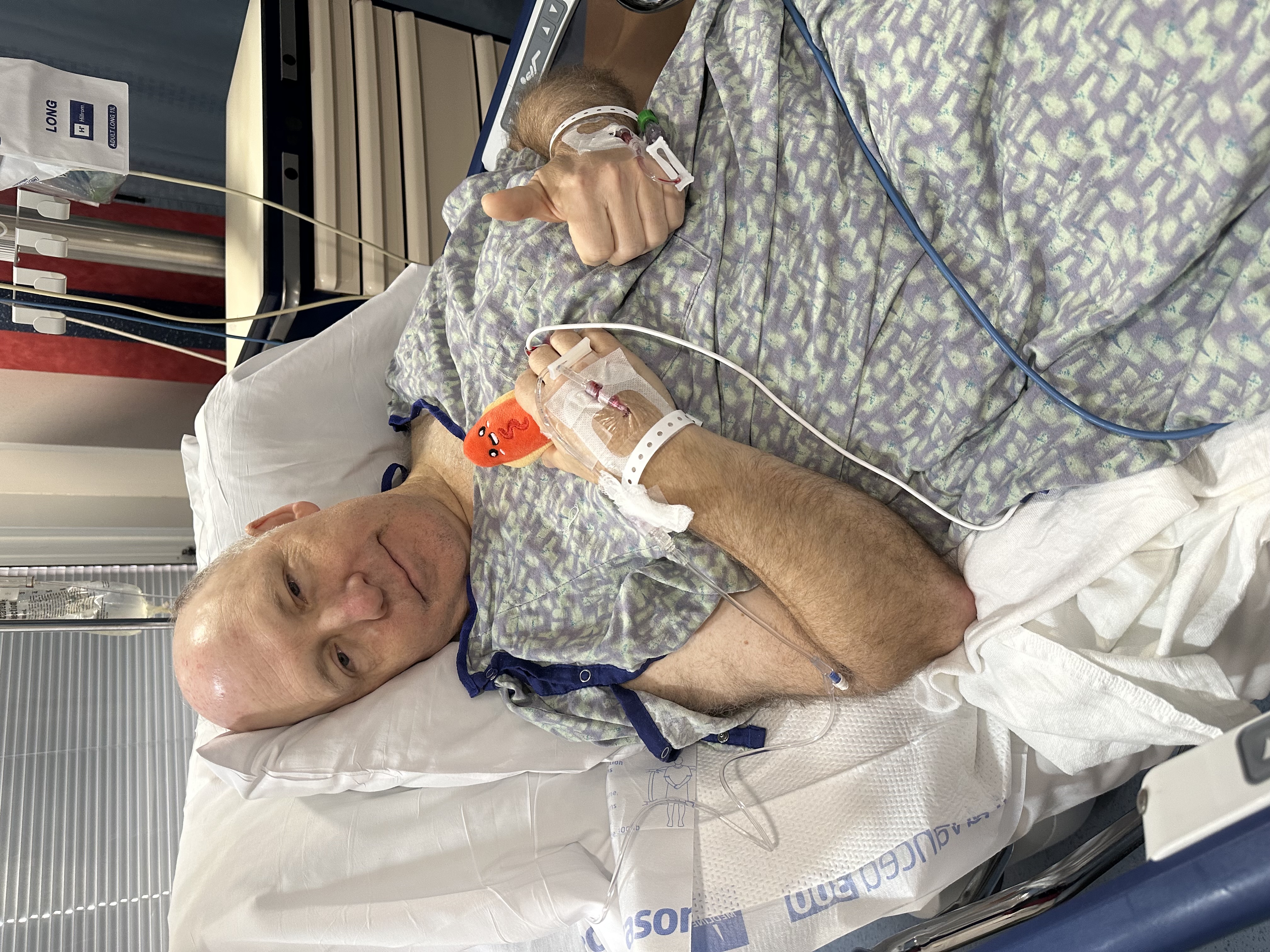
Tripp Clark’s stepson Trey found out about his failing kidneys soon after visiting his doctor for a sinus infection. "They got his blood work back, called him and told him to go straight to the emergency room,” Tripp said. “If he didn't get to the hospital, he may not have been alive a week later.” Trey was in complete kidney failure which means his kidneys had stopped functioning well enough to sustain life without medical intervention. For the next two years, Trey spent 8-10 hours a day hooked up to a dialysis machine at home.
Dialysis is an immediate lifesaving treatment for those suffering from kidney failure, however, many patients experience a diminished quality of life. Trey had to quit his job and was unable to do much of anything else because his treatment took up so much of his time and energy.
A year into his dialysis treatment, Trey was added to MUSC’s Living Donor Program: where a person who is eligible can donate to family, friends, co-workers, or even strangers. It is considered the gold standard in kidney transplant surgery. Compared to receiving kidneys from deceased donors, kidneys from living donors last longer, usually begin working immediately, and allow for extensive pre-screening from donors to ensure the kidneys are healthy.
Several of Trey’s family and friends volunteered to be pre-screened as potential donors; all but one were immediately disqualified. “I was fortunate to have a pretty good health history and so was chosen at least to proceed to further testing,” Tripp said. What followed is a series of tests including psychological and social risk evaluations, blood/urine tests, CT scans, chest X-rays and cardiac assessments.
1 in 7 U.S. adults have kidney disease, and 90% don't know it.1
It was determined early in the process that Tripp was not a match to donate to his stepson. They had options, though, including the kidney donation chain or “daisy chain” where a single donor’s kidney starts a series of transplants, allowing incompatible donor-recipient pairs to receive compatible organs. In the spring of 2025, Tripp and Trey became part of a donation chain consisting of 30 people. With this process, one person dropping out breaks the entire chain. Unfortunately, the chain “broke,” and they were back to square one.
Their next option was the Paired Exchange Program, or kidney swaps that allow living donors who are incompatible with their intended recipient (e.g., parent to child) to swap with another incompatible pair.
Fast forward to fall of 2025. Just before Trey’s 44th birthday, his mom asked what he wanted for a gift. Trey said he wanted a kidney. “It was the first time we had heard him vocalize that because he had always said that hoping for a kidney for himself meant that somebody else had to die,” Tripp said. The day after Trey’s birthday on Oct. 7, Tripp received the long-awaited phone call — a potential swap would take place with an anonymous pair as soon as everyone agreed on a date.
On Dec. 10, the Medical University of South Carolina (MUSC) in Charleston, successfully implanted Tripp’s kidney to a man named Vince. Trey received his kidney from Stephanie who is Vince’s nephew’s girlfriend. “I think she’s the saint in all of this because she wasn’t even a family member,” Tripp said.
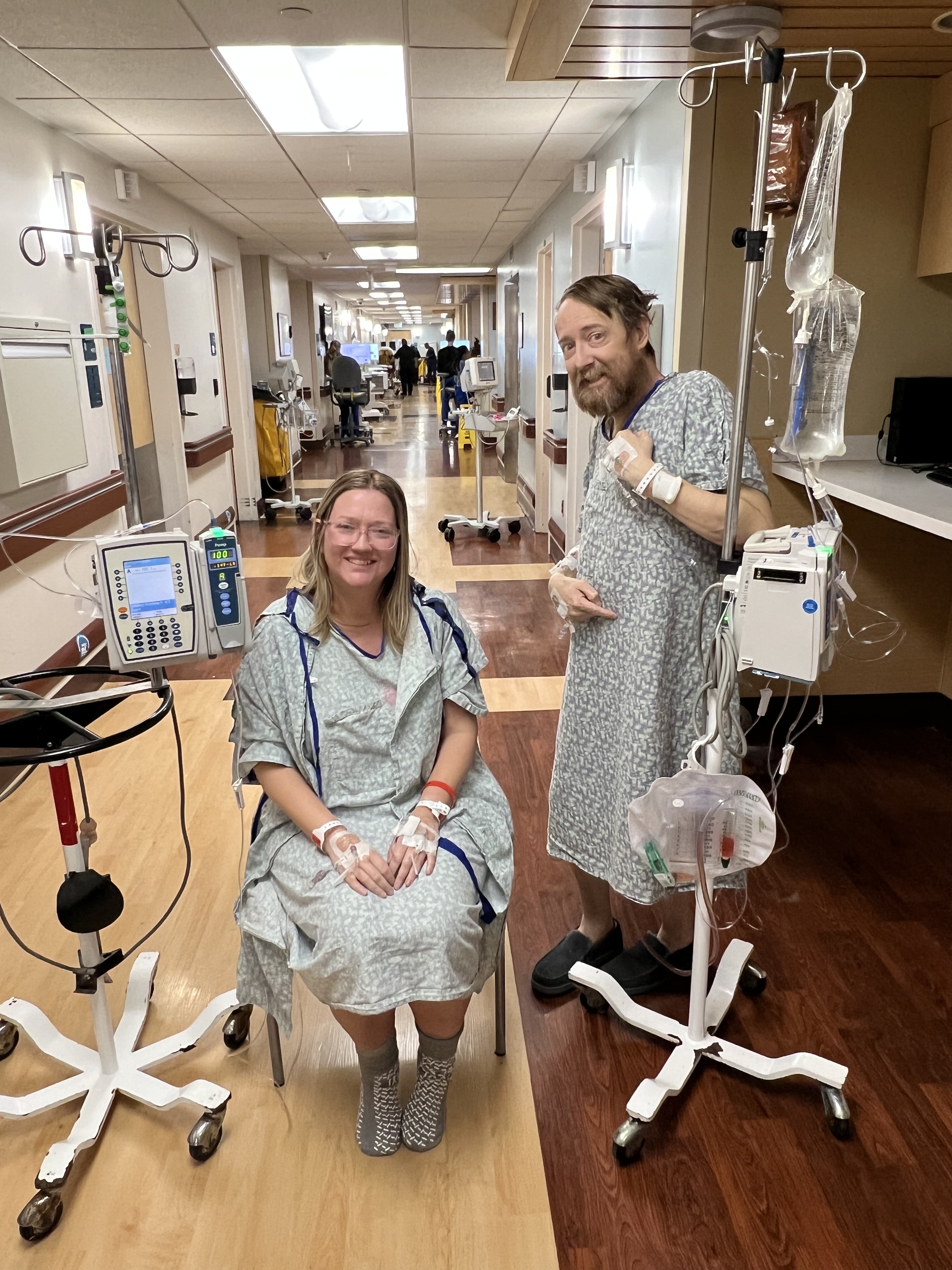
While recovering, everyone involved, along with their families, decided to meet in person. “It was a very emotional meeting as you might imagine with a few tears and lots of hugs,” Tripp said. They exchanged stories. Vince’s family is originally from New Jersey. He and his wife recently moved to Myrtle Beach — a move that he attributed to saving his life because his doctors back home had not detected anything wrong with his kidneys. Vince’s kidney failure was diagnosed right after his first appointment with his new doctor in Myrtle Beach.
A couple of hours after everyone met, “there was a lot of activity in the hall, and the staff asked me what I was doing and I said, well, I wanted to get a picture with Vince, and they said you have to go back to your room now.” Tripp later learned that Vince suffered a massive heart attack.
Tripp sat with Vince's wife and the hospital chaplain as they received the news: The doctor said they had gotten Vince’s heart pumping again after 45 minutes without a heartbeat. They also warned that after being down for so long, there could be severe organ or brain damage.
The next day, Vince no longer needed to be on a breathing tube. He suffered 15 broken ribs and was already scheduled to receive a pacemaker. He was alert. He remembered everything including the heart attack, chest compressions and the pain from his ribs breaking. The only time Vince lost consciousness was when he said he saw his father: “My father said Vince, it’s not your time, go back and take care of your family.”
“You hear about these stories of near death and glimpses of heaven, but to have that happen to someone that you’re obviously connected to is probably the most sticking memory from this whole thing.” Tripp said.
Donating and receiving a kidney leaves a profound sense of connection, gratitude, and life-altering impact on both the donor and recipient.2
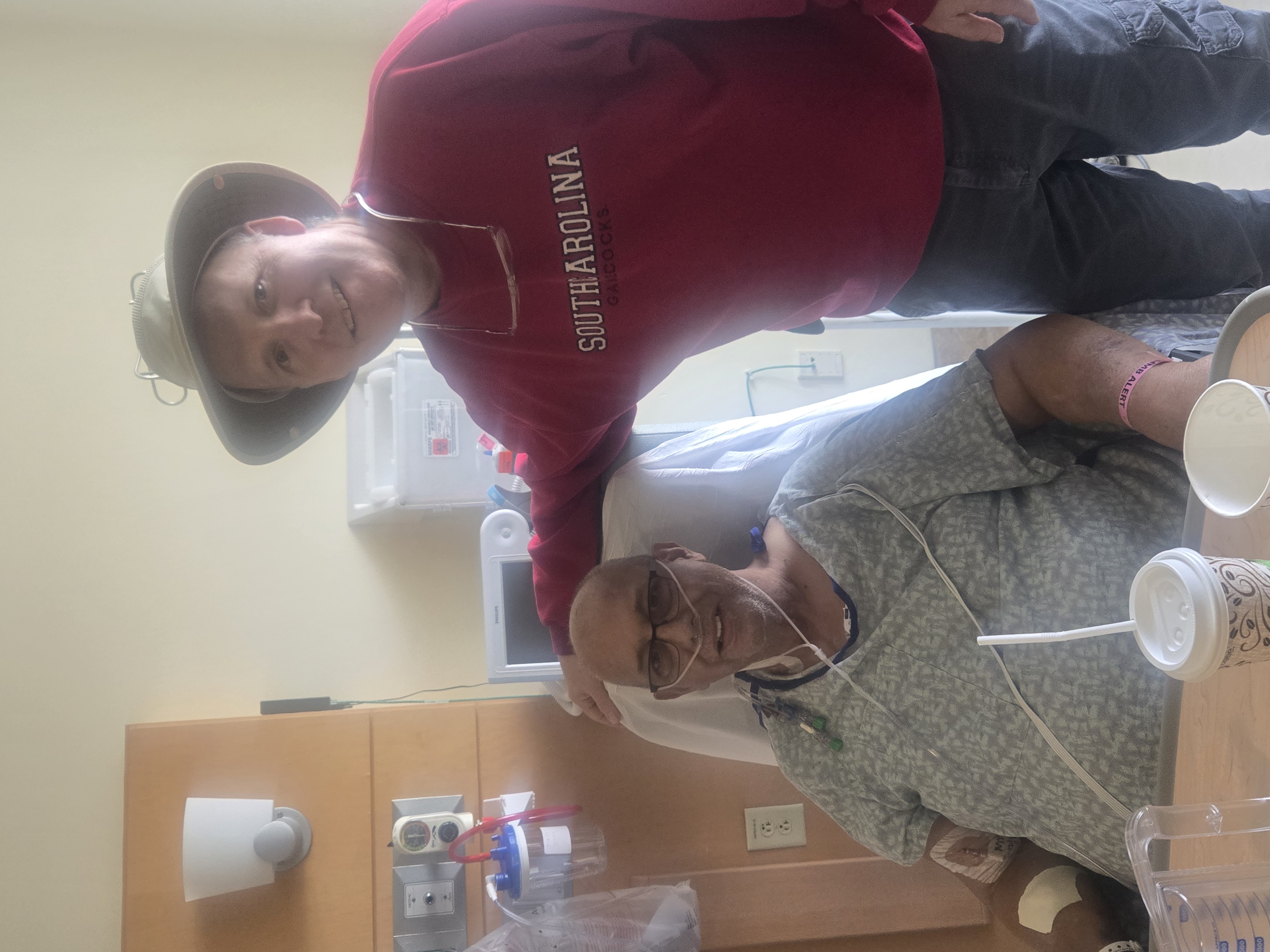
It’s been a little more than three months since the surgery, Vince’s near-death experience, and Vince and Trey’s new lease on life. Everyone is doing well. Vince and Trey have recurring check-ups to ensure their new kidneys are working properly and both continue to show improvements every day. Stephanie and Tripp are also continuing to see their doctors. They have all kept in touch since the surgery.
“Having gone through it all, I’m very much glad that I did it. You obviously have to have one kidney to live, so I won’t do it again, but if it was something I could do again, I would not have any hesitation,” Tripp said. “The downside and the pain were not near what I expected. And the upside, the joy and happiness and knowing that I literally saved someone’s life — that is far and away above any pain or discomfort that I had.”
Being a living kidney donor has a low impact on the donor. For a healthy donor, living day to day with one kidney is no different than living with two. Results from a Johns Hopkins study in 2015 of measuring more than 90,000 living kidney donors showed that living with one kidney did not change a kidney donor’s life expectancy. Multiple studies to date have shown similar results.
Sources
- https://www.kidney.org/
- https://www.kidneyregistry.com/for-donors/kidney-donation-blog/what-changes-after-kidney-donation/
Resources
- What to Know About Kidney Transplant Donor Requirements
- Early Risks of a Kidney Transplant
- Patients: Get Assistance
- Living Donors: Finance and Insurance
- Kidney Health for All
- Free Kidney At-Home Test Kit
Are Your Kidneys OK?
Upcoming Events
Webinar: Chronic Kidney Disease Basics
When: March 25, 2026 12 p.m. - 1 p.m.